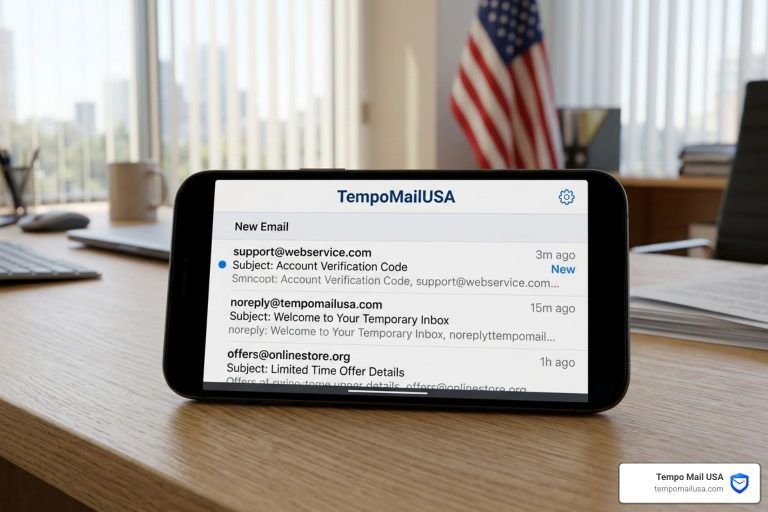
Your Real Inbox Is Under Attack — Here’s the Fast Fix
Tempomailusa temporary email no signup is a free service that gives you a working email address in seconds — no account, no personal details, no strings attached.
How to get started in 3 steps:
- Visit tempomailusa.com
- Your temporary email address is generated instantly
- Use it anywhere — receive emails, OTPs, and verification links right away
Think about what happens every time you hand over your real email address online. That address gets stored in databases, sold to advertisers, and sometimes exposed in breaches. In 2026 alone, over 3,200 data breaches exposed more than 422 million records in the United States. The average American already receives 16 or more spam emails every single day — and nearly every app or website demands an email just to let you through the door.
That’s the problem TempoMailUSA is built to solve.
It acts as a privacy firewall between your real inbox and the open internet. You get a fully working email alias on the spot. No signup form. No password. No risk to your personal information
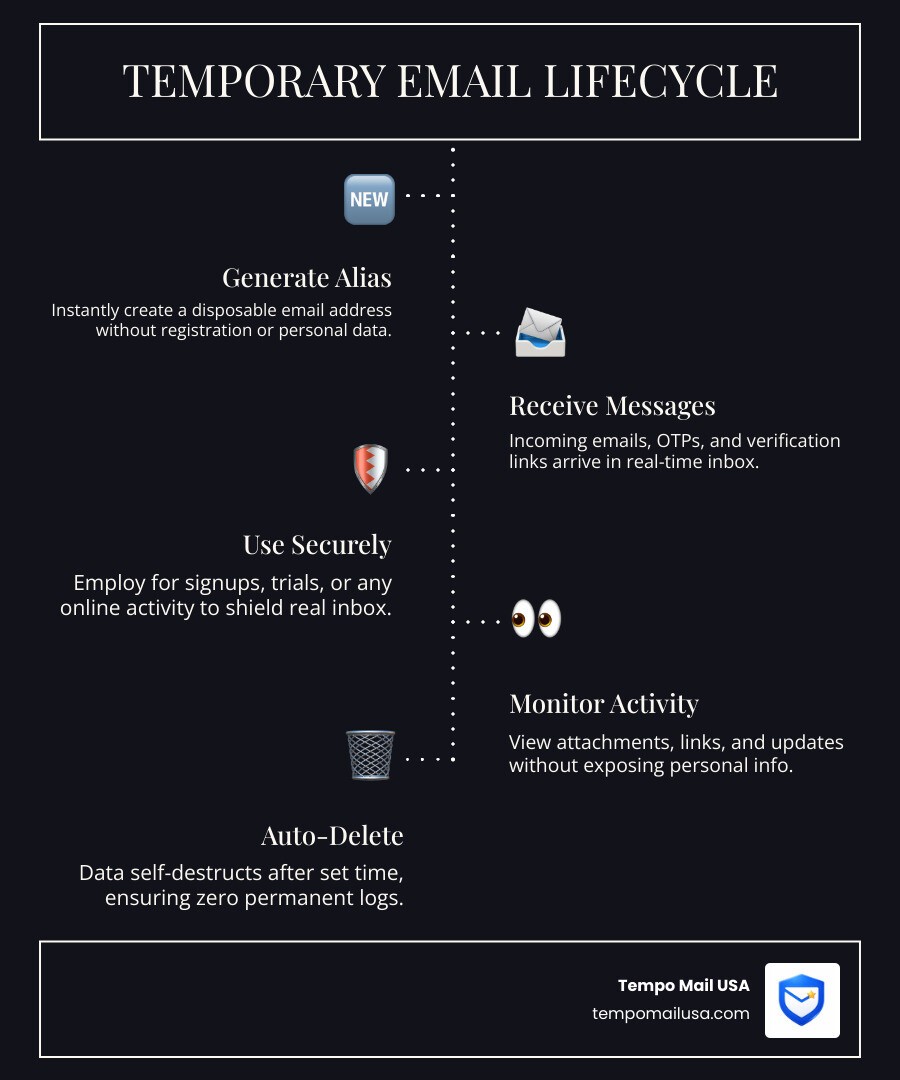
Understanding Tempomailusa Temporary Email No Signup Features
In the modern digital landscape, your email address is more than just a way to send messages; it is a digital passport. Unfortunately, that passport is often stamped by every tracker and data harvester on the web. We designed TempoMailUSA to provide a secure alternative through identity proxying.
When you use a tempomailusa temporary email no signup address, you are effectively shielding your Personally Identifiable Information (PII). Instead of giving a website your real name and primary contact info, you provide an ephemeral alias. This alias acts as a buffer, catching the verification codes and newsletters while keeping your real identity safely tucked away.
Our system is built on a foundation of simplicity. To truly understand how temporary email works for privacy, you have to look at the “firewall” concept. Traditional email providers are built for long-term storage and data collection. We, however, focus on the opposite: instant utility and rapid deletion. For a deeper dive, check out how does temporary email work – a complete guide.
Why Choose Tempomailusa Temporary Email No Signup for Privacy?
The biggest barrier to privacy is usually inconvenience. If a privacy tool takes ten minutes to set up, most people won’t use it. That’s why we offer instant generation with no registration required. You don’t need to provide a phone number, a backup email, or even a username.
We maintain a strict zero logs policy. Once your temporary session is over and the retention period expires, that data is purged using cryptographic methods. This level of commitment is why many users trust us for temporary email for privacy – safeguard your online identity. By using a temp mail – disposable temporary – anonymous email service like ours, you ensure that if a website you signed up for is ever hacked, the hackers only get a “dead” email address that can’t be traced back to you.
Advanced Recovery Keys and Custom Domains
One common complaint with disposable email services is that if you accidentally close your browser tab, your access is gone forever. We solved this with our unique Recovery Keys. When you generate an inbox, you receive a cryptographic key. If you clear your cache or switch devices, you can simply enter this key to restore your session.
Furthermore, we utilize domain rotation. Some websites try to block temporary email providers. To stay ahead of these filters, we constantly rotate the domains we use, ensuring you can sign up for the services you need without being “blacklisted.” This makes tempomail – your go-to solution for disposable emails even for the most stubborn registration walls. For more advanced tips, see the ultimate guide to private disposable email.
How to Use a Temporary Email Without Signing Up
Using our service is designed to be faster than a microwave minute. Here is the workflow:
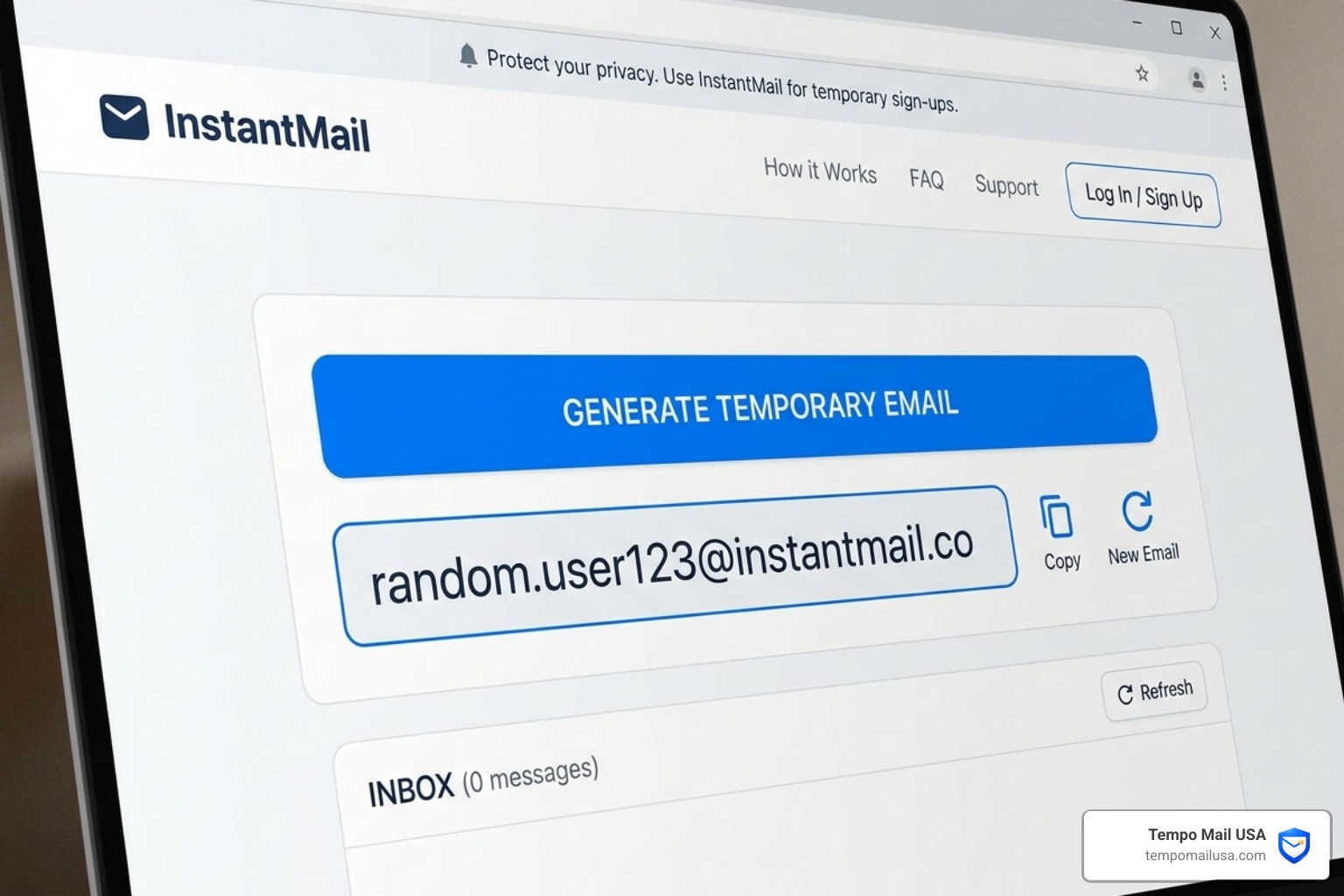
- Generate: As soon as you land on our page, a unique address is waiting for you.
- Copy: Use the one-click copy button to grab the address.
- Paste: Put it into the signup form of the website you’re visiting.
- Extract: Watch our real-time inbox. When the One-Time Password (OTP) or verification link arrives, click it.
- Ghost: Once you have what you need, you can manually purge the inbox or just walk away.
This process is the gold standard for how to create a temporary email easily – free and secure.
Managing Your Tempomailusa Temporary Email No Signup Inbox
Our interface isn’t just a static page; it’s a high-speed communication node. We provide real-time updates, meaning you don’t have to constantly hit the refresh button while waiting for a confirmation code. Most emails appear in under 0.5 seconds.
We also offer attachment support. If a service sends you a PDF guide or a whitepaper, you can download it directly from your temporary dashboard. It’s a full-featured experience without the long-term baggage. For a quick refresher on these tools, read your instant inbox – a quick guide. You can find our main hub at temp mail usa.
Real-World Use Cases for Disposable Addresses
Why would you need a tempomailusa temporary email no signup address in your daily life? The reasons are more common than you might think:
- Software Testing: Developers and QA engineers use us to test registration flows and 2FA triggers without clogging their own accounts.
- Coupon Hunting: Want that 15% discount but don’t want three years of marketing emails? Use a temp address.
- Newsletter Trials: Check if a newsletter is actually valuable before committing your real PII.
- Avoiding the “Spam Avalanche”: With the average American receiving 16+ spam emails daily, every address you don’t give out is a victory.
Using our service allows you to get a one-time email address and ghost the spammers effectively.
FeatureTraditional EmailTempoMailUSASignup RequiredYes (often needs phone #)NoPrivacyLow (Data is harvested)High (Identity Proxying)Spam ProtectionFilters (often fail)100% (Inbox is disposable)SecurityTargeted by hackersMilitary-grade encryptionLifespanPermanentEphemeral/Customizable
Privacy Standards and Data Retention Policies
We don’t just talk about privacy; we bake it into our architecture. Our servers are based in the United States, allowing us to leverage local data sovereignty and ensure low latency for our 500,000+ American users. We are fully CCPA-compliant, meaning we respect your right to know what data is collected (spoiler: almost none) and your right to have it deleted.
All data in transit is protected by TLS 1.3, and any data temporarily held at rest is secured with AES-256 military-grade encryption. We believe that even if an email only exists for ten minutes, it should be the most secure ten minutes possible. Our tempomailusa automatic deletion retention policy ensures that your digital footprint is wiped clean regularly.
Security Layers and Phishing Protection
To protect our users, we implement a Web Application Firewall (WAF) and HSTS preloading. This prevents “man-in-the-middle” attacks and ensures your connection to our site is always encrypted.
We also take an active stance against malware. Our inbox viewer automatically blocks external tracking scripts and images that could be used to identify your IP address or infect your device. This makes us a “secure standard” for those looking to proxy temp mail explained – protect your real email. For a look at how we stack up against other retention standards, see our 12-hour retention policy disposable email comparison.
Frequently Asked Questions about Temporary Emails
How long does a temporary email address last?
By default, our system is designed for short-term tasks. Most inboxes stay active for several hours of inactivity before they are automatically purged. However, if you keep the tab open or use a Recovery Key, you can extend your access. Some of our premium-tier domains offer even longer retention periods for those who need to wait a few days for a specific verification.
Can I recover my inbox if I close my browser?
Yes! This is one of our standout features. When you create your tempomailusa temporary email no signup address, look for the “Recovery Key” or “Token” section. Copy this code and save it in a safe place (like a password manager). If you close your browser or your computer restarts, simply return to our site, click “Recover Mailbox,” and paste your key. Your messages will be right where you left them.
Is it safe to use a temporary email for attachments?
Absolutely. We support the reception and download of file attachments. Our system scans incoming files to ensure they don’t contain common threats, providing a safer environment than opening an unknown attachment in your primary personal inbox. However, we always recommend using a temporary email for receiving info, not for storing sensitive documents long-term.
Conclusion
In an era where data breaches are a daily occurrence, tempomailusa temporary email no signup is no longer just a “handy tool”—it’s a necessity. We have helped over 14 million users migrate away from risky email habits, processing over 23 million emails with a 99.99% uptime guarantee.
By acting as a privacy firewall, we give you the power to explore the internet, sign up for services, and claim your rewards without sacrificing your personal identity. Protect your inbox, stop the spam, and take back control of your digital life today.
Ready to ghost the spammers? Get your temporary email now at TempoMailUSA.